
governorbudget

Governor’s Budget Blueprint Affirms California’s Commitment to Closing Financial Services and Racial Wealth Gap

Sacramento, CA – Members of the community coalition supporting the CalAccount program applauded Governor Newsom’s focus on ensuring all Californians have equitable access to financial services in the May Revision Budget proposal presented on May 13th for fiscal year 2022-23.

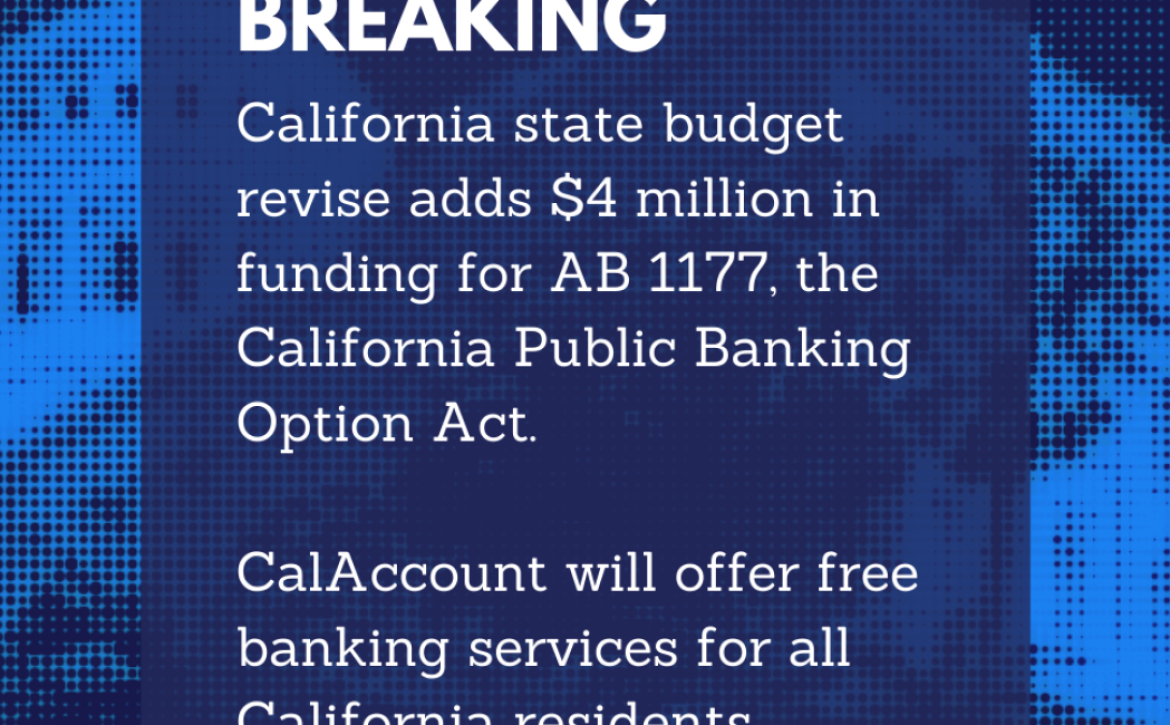
The May Revision budget allocates $4 million to complete the market analysis, the first step in the creation of the CalAccount program as required by the California Public Banking Option Act, AB 1177 (Santiago), signed into law in 2021. CalAccount guarantees all Californians a no-fee, no-penalty debit account, with no overdraft fees, no minimum balance requirement, automatic bill pay capacity and free ATM access at participating banks. After approval by the legislature, the CalAccount program would partner with financial institutions to close the widening wealth gap fueled by the exclusion of low-wage communities from basic banking services.

One in four California households are unbanked or underbanked, meaning they lack a bank account or pay a high price for basic financial transactions like cashing their paycheck.

Seventy-eight percent of unbanked households make less than $30,000 annually and 42% make less than $15,000 annually. Nearly half of all Black-identifying households and Hispanic-identifying households in California are unbanked or underbanked.

Assemblymember Miguel Santiago (D-Los Angeles), author of the California Public Banking Option Act,

“Thank you to Governor Newsom and Treasurer Ma for recognizing the urgency of analyzing a public banking option. This investment in the CalAccount market analysis will move California one step closer to providing public banking – no-fee, no-penalty banking – to all who want it. I look forward to working with the Legislature to ensure this funding is in the final budget.”

Glenis Murillo, a McDonald’s worker and leader in Fight for 15 and a Union,

“Free banking services make sure that Californians like me will be able to use our hard-earned dollars for food and rent, instead of paying banking fees. Too many Californians are living paycheck to paycheck but are having to pay hundreds of dollars each year just so that we can keep our bank accounts open. We are being penalized for being poor.”

Paulina Gonzalez-Brito, Executive Director, California Reinvestment Coalition,

“The state budget serves as a reflection of Californian’s priorities. The May budget revision affirms Gov. Newsom’s commitment to leveling the playing field and increasing opportunities for Black and Brown communities to participate in a financial system from which they’ve been historically excluded. We applaud Gov. Newsom’s decision to allocate resources to the California Public Banking Option Act, which should serve as a national model for other states looking to provide universal access to basic financial services.”

Trinity Tran, Lead Organizer and Political Director, California Public Banking Alliance,

“This is a major step for universal banking access which will be life-changing for millions of Californians facing barriers to basic banking from high-costs and predatory fees. With the $4M budget allocation, we hope to see CalAccount’s market analysis completed by 2023, enabling this vital program to move forward without delay.”

CalAccount.com

Read More
eastbayactivites

East Bay Activists Unveil New Blueprint for a Regional Public Bank

NextCity – Twice a year, when property owners pay their local property tax bills, Alameda County Treasurer Hank Levy sees a huge influx of cash into county coffers. After paying off the county’s own bills and other expenses, there’s always some cash left over that doesn’t need to be spent right away — though it’s all earmarked for salaries, programs, projects and other costs that come up later. As do most local or state treasurers, Levy’s office invests whatever he doesn’t need to spend right away, earning some interest for the county in the meantime.

Right now, Levy’s office holds an investment portfolio of around $7 billion. About half of that is invested in U.S. Treasury Bonds or other securities backed by the Federal Government — assets that don’t earn very much interest right now but they are considered “highly liquid,” meaning Levy can sell them easily to other investors when the county needs the cash. Another 20% of the portfolio is invested in certificates of deposit at banks, which Levy can schedule out to mature on a fixed timeline that matches up with the county’s cash flow needs. Levy recently moved $200 million into certificates of deposit at 10 local banks that committed to lend at least the same amount to Alameda County residents and businesses.

A group of local activists want to give Levy a new option for the county’s portfolio — depositing some of that $7 billion in a public bank, meaning a bank that’s owned by a unit of government, holds cash from those governments, and whose lending policies and priorities are set democratically by constituents.

Friends of a Public Bank East Bay formed in 2017 to push for such a bank. It released a blueprint in March for a bank that would be jointly owned by Alameda County as well as the Cities of Oakland, Berkeley and Richmond. The blueprint envisions the bank would make loans to support more deeply and permanently affordable housing, for small businesses owned by Black, indigenous and other people of color, and potentially even do some infrastructure lending for municipalities. It would be modeled in part on the Bank of North Dakota, established in 1919 and until recently the only state-owned bank in the country. Nearly all of the Bank of North Dakota’s deposits come from the state government, which is required by law to deposit all of its revenues in the state-owned bank.

Continue reading on NextCity.org.

Read More
proposalsforpublicbanks

Proposals for Public Banks Move Forward in Several States

People’s World – For too long a handful of corporate banks have controlled the financial destiny of the overwhelming majority of Americans. Throughout American history, a commercial oligarchy was responsible for feeding corporate greed and when markets collapsed from too much debt and not enough resources to adequately fund it, countless millions of workers and their families paid the price for other people’s folly and suffered disastrous consequences.

In recent years there have been severe recessions, collapsing financial markets, and subsequent government bailouts of corporate banks, protecting the interests of stockholders at the expense of depositors and helpless debtors.

There are alternatives to corporate banking though there are very few available to consumers.

The traditional savings, or building and loans, prominently featured in the Christmas classic “It’s A Wonderful Life,” are being swallowed up and taken over by larger corporate banks as a direct result of banking deregulation in the 1980s.

Recently there have been proposals in various states to authorize the creation of state-owned banks. There is already one state-owned bank in North Dakota that has been in existence for nearly a century and has been very successful in providing loans and other means of financial support to small farmers and business owners, as well as consumers.

The Governor of New Jersey, Phil Murphy, has also proposed a state-owned bank and made it part of his campaign platform when he ran for governor in 2017. In 2018 a bill to establish such a bank was introduced in the state legislature, and in 2019 Murphy signed an executive order creating a commission, known as the Public Bank Implementation Board, to provide exact details on how the bank would be established.

That same year California Governor Gavin Newsom signed into law the Public Banking Act which empowers county and municipal governments to establish their own community owned banks, and last year the New York Public Banking Act was introduced in the New York State Assembly, and the State Senate. Unfortunately, the recent pandemic, and fierce opposition from corporate banking and business interests, have delayed and frustrated attempts to proceed with successfully establishing publicly owned banks.

Continue reading on People’s World.

Read More
bankofgood

Californians Need A “Bank of Good”

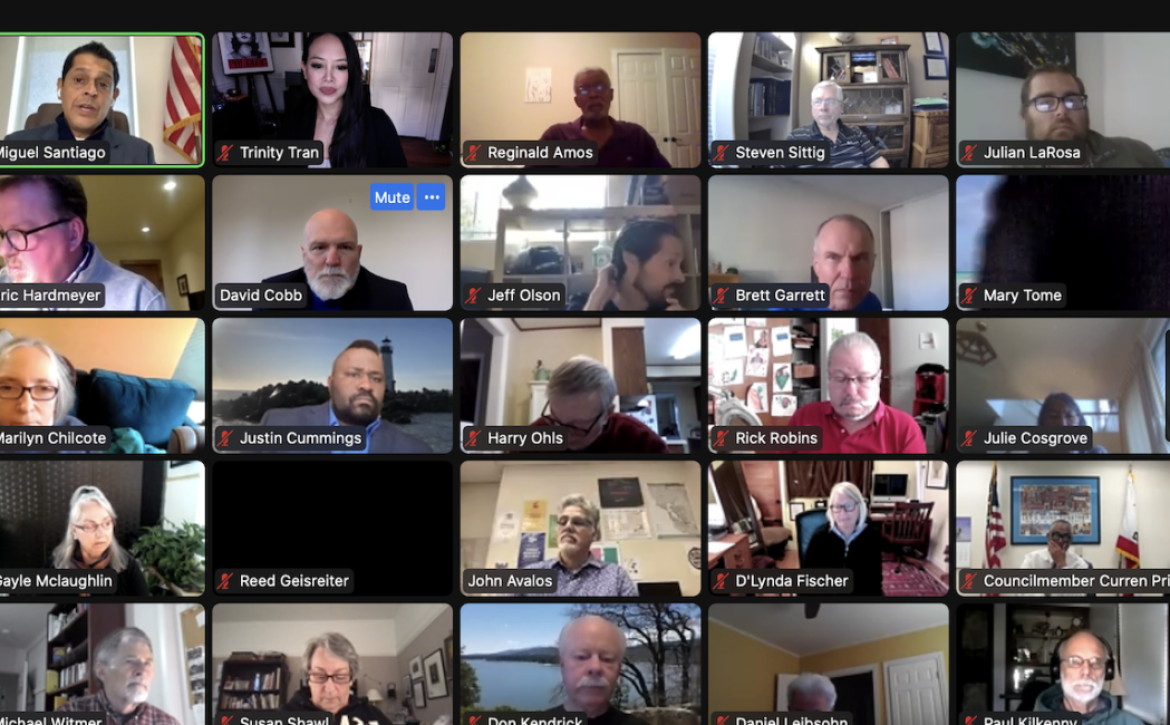
Public banking is on a roll! On Wednesday March 30, 2022, over 170 community members joined the California Public Banking Alliance (CPBA) Town Hall featuring elected officials from cities and regions actively working to form public banks. People across the nation are turning out to learn more about public banking — and Californians are at the forefront of making public banks a reality for the first time in generations.

Public banking activists, politicians and financial experts are busy producing viability studies and business plans so that public banks can come online in the near future. Public banks are a powerful tool to keep taxpayer dollars reinvested in local communities. We’re grateful for the leadership provided by legislators from five cities (Los Angeles, San Francisco, Long Beach, Richmond, and Santa Cruz) joining us to discuss their commitment to making public funds work for the public by their courageous efforts to establish local public banks.

If you missed last week’s town hall, tune in to the replay.


Thank you to all participants for joining in a robust town hall chat. We’ve added answers to your questions and comments in this document.

Read our event wrap-up on the CPBA Medium page.

Read More
Screenshot 2024-11-20 at 2.51.13â€ŊPM

Supes To Give $75K To Help Plan Public Bank For East Bay

SF Gate – March 15, 2022. A vision for a public bank in the East Bay– and possibly only the second one in the country– got a boost Tuesday when Alameda County Supervisors voted to give $75,000 to a group aiming to start one.

Supervisors voted unanimously to give the money to Friends of the Public Bank East Bay, which has already taken steps to start a bank. (Supervisor Richard Valle was excused from the meeting.)

The money from the supervisors is for planning activities, according to a letter to the board from Supervisor Dave Brown. The money is coming from Brown’s fiscal management reward funds.

“A public bank would provide many public benefits to the community,” Brown wrote. “It would create a long-term multigenerational source of capital for East Bay communities, and would cut infrastructure construction costs significantly by providing low-interest loans.”

Brown added that such a bank “would return profit and interest to local communities and bring transparency and democracy to banking and investment of public funds. Lastly, a public bank would help strengthen local banks and credit unions by backing their loans and letters of credit.”

Friends of the Public Bank East Bay have already completed a viability study for a public bank, according to the group’s website. A viability study is a necessary step under the California Public Banking Act.

The California Public Banking Act was established by Assembly Bill 857 and signed by Gov. Gavin Newsom in 2019. The law enables government entities to form public banks.

Friends of the Public Bank East Bay are now working on a business plan, another step in the process required by law.

Read More

japanese porn telegram channel ✓ Top 31+ Channels for Adult Content

Japanese porn telegram channel offers access to 31+ exclusive adult groups. ✓ Join now for premium content, videos, and discussions on Japanese pornography! ➔

Read More
anotherlandmaark

Another Landmark Year for Public Banking in California Brought to You by the California Public Banking Alliance!

Public Banking took a huge leap forward this year with many first-in-the-nation accomplishments.

â€Ē Passage of first-in-the-nation bill for universal free banking services. The California Public Banking Alliance (CPBA) and our allies pushed the California Legislature to enact Assembly Bill 1177 in order to provide financial services for unbanked or underbanked Californians. On October 4, 2021, Governor Gavin Newsom followed up by signing the California Public Banking Option Act (AB 1177) into law.AB 1177, authored by Assemblymember Miguel Santiago, authorizes a commission of financial access experts, community members, and government representatives to begin implementing the CalAccount program. Upon securing final approval from the Legislature, the program will create a state-sponsored retail banking option offering a zero-fee, zero-penalty debit card enabling direct deposit from employers and public benefits, automatic bill pay, and many other financial services to every Californian.

California Public Banking Alliance joined with SEIU CA, California Reinvestment Coalition, public banking advocates, unions, and community organizations across California to pass this landmark legislation that will help close the racial wealth gap fueled by the exclusion of low-wage communities of color from basic banking services.

â€Ē The California Public Banking Option Blue Ribbon Commission is getting underway. The Governor, Treasurer, and Senate and Assembly Leadership are now in the process of selecting and seating the CA Public Banking Option Blue Ribbon Commission to begin operations in 2022, as required by AB 1177. CPBA is working to make sure it fulfills its promises.

In the months ahead, the CalAccount Blue Ribbon Commission will convene to conduct a market analysis and to determine the best way to implement the CalAccount program. There will be opportunities for advocates to take part in shaping the CalAccount program and co-hosting public outreach forums.

â€Ē CPBA local affiliates are establishing the nation’s first municipal banks. Local public banking advocates are busy in San Francisco, Los Angeles, the East Bay, the Central Coast, Pomona Valley, San Diego, North Coast, and Humboldt County, working with their representatives getting their local public banks up and running. This is no small task. There is much work to be done to fulfil the requirements of AB 857, the California Public Banking Act passed in 2019.

â€Ē City and county representatives need to pass enabling legislation.
â€Ē Publicly-minded banking experts need to be located and summoned to fulfil the requirements of AB 857.
â€Ē Money needs to be allocated.
â€Ē Business plans need to be drafted.
â€Ē Banking managers and administrators need to be identified Read our status updates on California Public Banking Alliance cities and regions.

â€Ē Read our status updates on California Public Banking Alliance cities and regions.

â€Ē On the Federal level and across the nation, public banking is sprinting ahead. On the Federal level and across the nation, public banking is sprinting ahead. The House Committee on Financial Services, chaired by California’s Maxine Waters, held one of its first hearings on public banking. During the hearing on “​Banking the Unbanked: Exploring Private and Public Efforts to Expand Access to the Financial System,” Reps. Rashida Tlaib and Alexandria Ocasio-Cortez discussed the Public Banking Act of 2021 to foster the creation of public banks across the country by providing a pathway to establishing an infrastructure for liquidity and credit facilities via the Federal Reserve, and setting up federal guidelines for regulation.

Additionally, public banking advocates in New York, New Jersey, Massachusetts, Philadelphia, and many other states and cities throughout the US are pursuing establishing public banks.

The many accomplishments of 2021 will build momentum for the coming year and lay the foundation for our next steps in 2022 and beyond: Getting control of our money out of the hands of Wall Street banks, providing financial services to those most in need, and getting our municipal public banks up and running so our cities and counties can provide permanently-affordable housing, support small and worker-owned businesses, enable community solar, and meet other critical needs.

Read More
bankalternative

The Public Bank Alternative

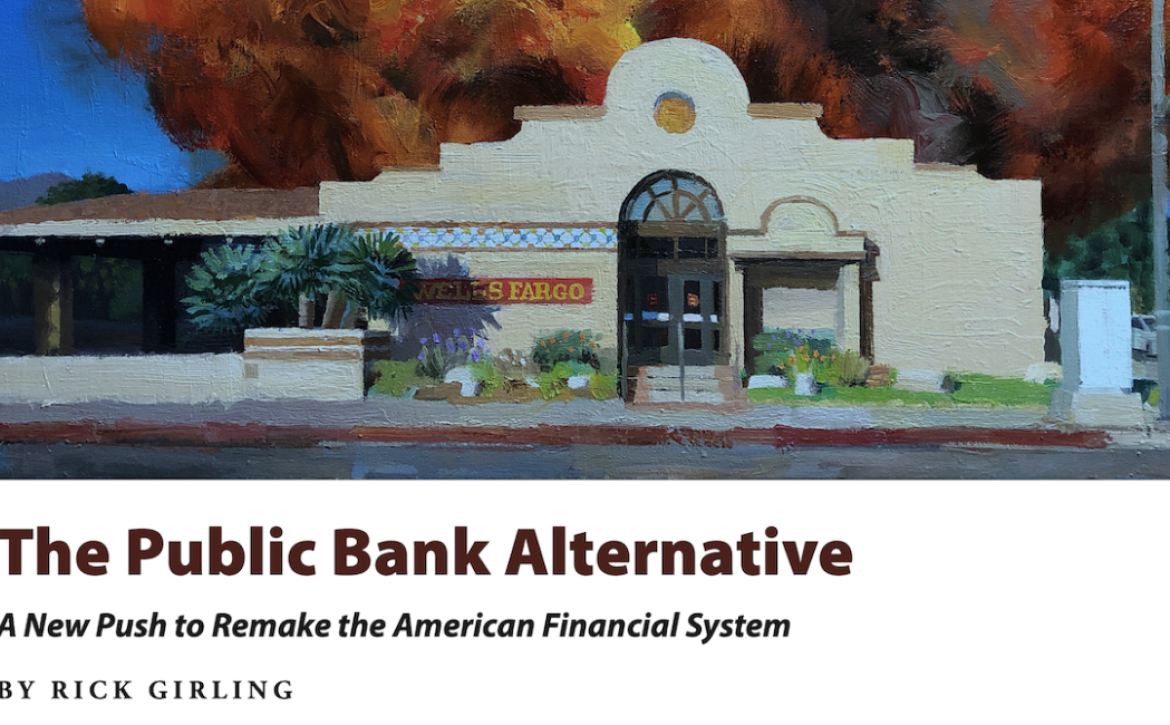
Dollars and Sense features Rick Girling’s article in the September/October issue. Read his follow-up piece  “Corporate Bankers Wary of Public Banking” on Page 8 of the November/December Issue.

Ever-growing inequality has helped consolidate and concentrate corporate control over the U.S. economy. The financial sector is a prime example. This issue’s third feature article, by public banking activist Rick Girling, describes an alternative approach to banking that can “challenge unelected and unaccountable corporate bank executives’ control over the nation’s financial system.

AN HISTORIC HEARING TOOK PLACE ON JULY 21 WHEN THE House Committee on Financial Services for the first time in recent history discussed public bank- ing. Deyanira Del Rio from the New Economy Project, along with other panelists, presented proposals for revamping the American financial system to rebuild the economy and reach the one-fifth of Americans who are either unbanked or underbanked—those lacking bank accounts, and those who have bank accounts yet rely on payday lenders and other predatory financial services.

In her remarks to the committee, Del Rio explained the importance of public banks in this historical moment:

“Public banking would serve as an especially powerful tool as cities and states throughout our country work to advance a just recovery from the pandemic and to withstand future crises. We’ve seen that countries that have public banks are significantly more resilient in the face of crises than those without them and that’s precisely because local public banks invest in sectors that provide direct economic, social, and environ- mental benefits.”

Continue reading on Dollars and Sense.

Read More
reformforthepeople

The Latest in Banking Reform for the People

Next City – October 12, 2021. Out of eight million unbanked households across the country, one million are in California alone. The state is now looking to address this by taking a page out of the former USPS savings account playbook.

Assembly Bill 1177, passed in September and signed by Governor Gavin Newsom last week, envisions a state-branded bank account service, dubbed “CalAccount.” The state would set the parameters for each account, including debit card and ATM access, no overdraft fees, no minimum balance requirements, online bill pay, and direct deposit capability. The state would also serve as the public face and marketing force behind the program — there would be CalAccount branding on debit cards, for example. I wrote about the details of this program over the summer.

Supporters bill CalAccount as a “public option” for banking — but behind the scenes, like the former USPS program, the accounts would still be held at private banks. The idea is to have the state’s seal of approval and its power as an intermediary to ensure consistency and transparency for CalAccount holders, who wouldn’t have to worry, for example, that features like no fees or no minimum balance will disappear with little notice and no say from consumers.

Continue reading on Nextcity.org.


Read More
losangeles

Los Angeles could be 1st major U.S. city to get a public bank

ABC7 News – October 8, 2021. Los Angeles might be the first major metropolitan city to create a public bank. A public bank would be owned and operated by the city.

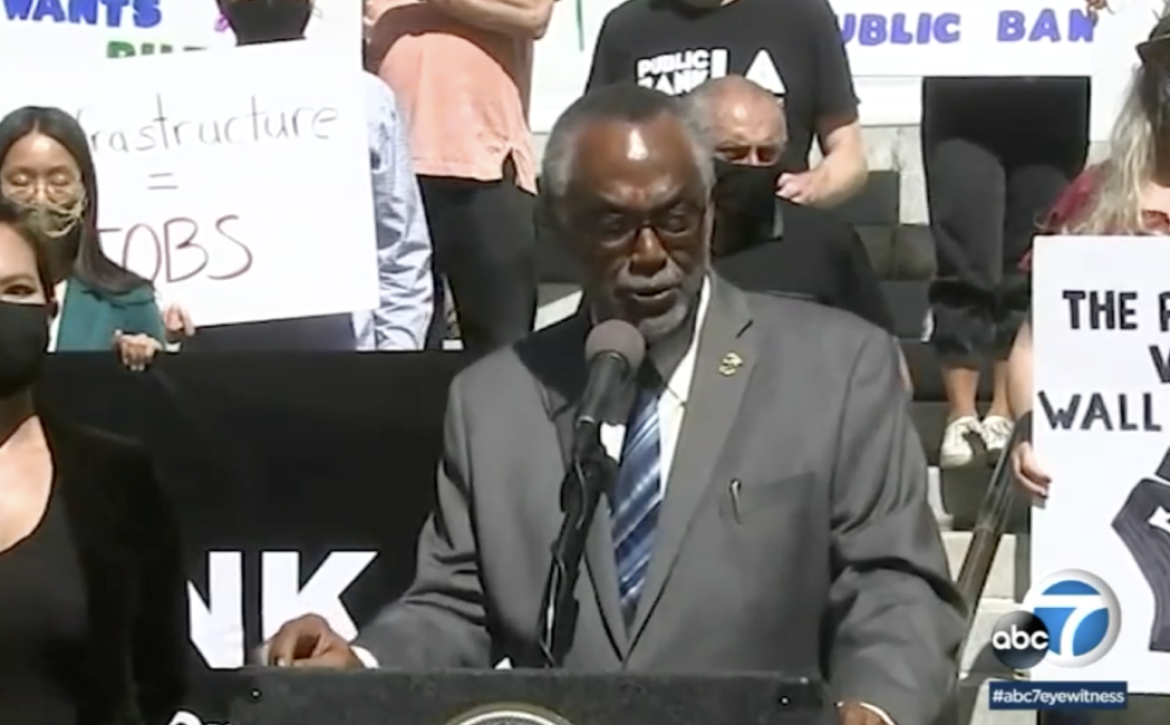
Los Angeles City Council voted unanimously to take the first steps in seeing the viability of a public bank. According to city councilmembers, it aims to help low-income communities and could provide investment opportunities at a local level. And they say the bank operations would include:

Credit access for small businesses
Financing for affordable and social housing
Plus, opportunities for green energy investments

Continue reading and watch the video on ABC 7 News.


Read More